
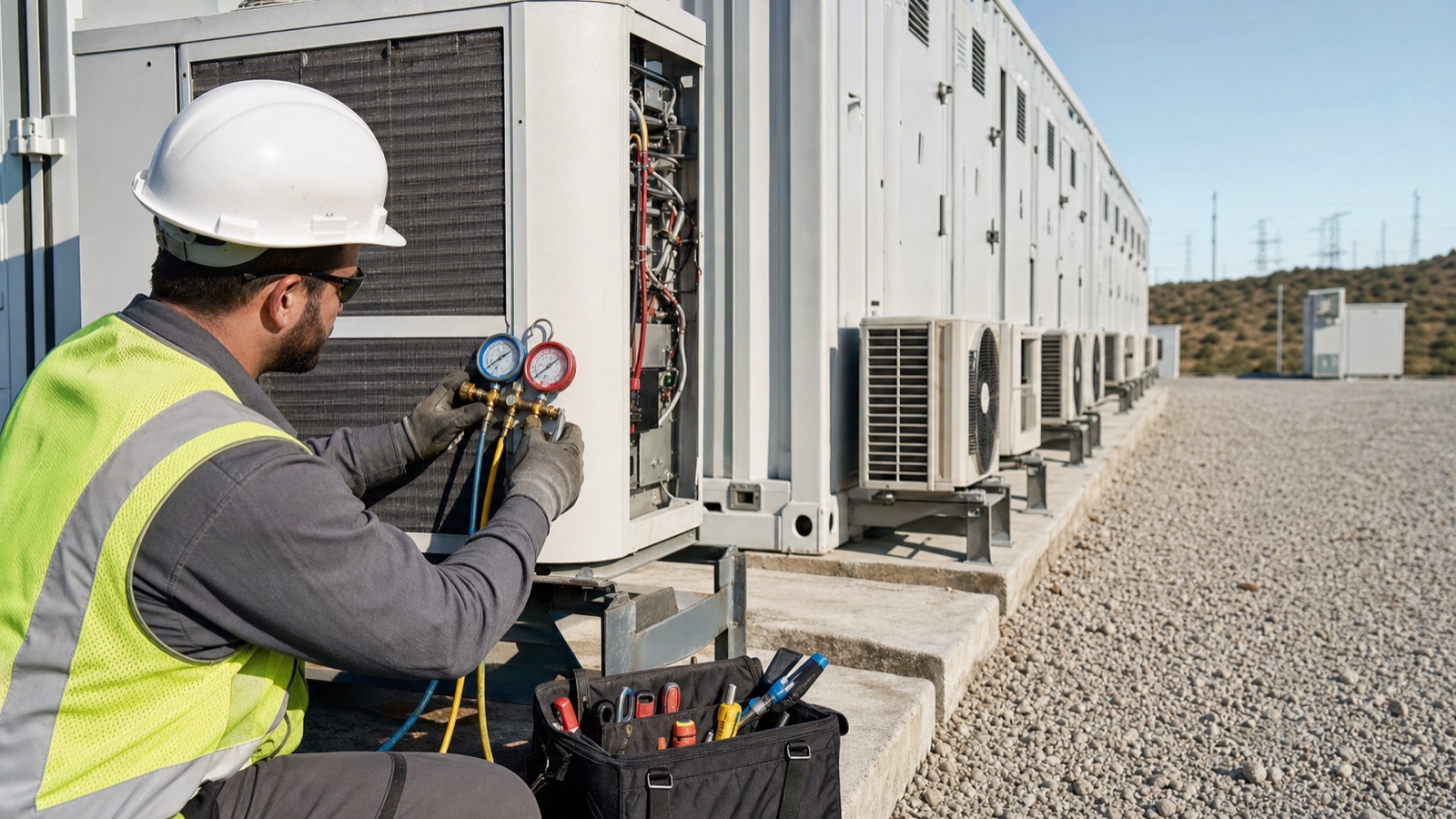
When owners think about protecting a battery energy storage investment, they tend to think about the batteries themselves — chemistry, warranty terms, cycling limits. In our field work, the component that most often decides how a site ages is less glamorous: the climate control system keeping those batteries in their comfort zone.
Heat is a cost you pay later
Lithium-ion cell aging generally accelerates when temperatures remain above the equipment manufacturer's target range. Uneven temperatures can also produce uneven degradation across racks. The damage is rarely obvious during one shift; it appears later as early capacity fade, imbalance, and growing cooling demand.
Temperature problems also cost money right now, in three ways:
- Derating. When the system cannot hold temperature, the BMS protects the cells by limiting power — which means missed market commitments and lost revenue.
- Imbalance. Uneven cooling creates uneven temperatures across racks. Cells age at different rates, and the weakest position starts limiting the whole system.
- Warranty exposure. Most battery warranties assume the system was kept within a specified temperature envelope. Poor HVAC upkeep can put claims at risk.
How climate systems quietly fail
BESS HVAC rarely fails all at once. It degrades in stages, and each stage is easy to miss if nobody is looking:
- Clogged filters and dirty coils. The most common issue we find, and the cheapest to fix. Airflow drops, run times stretch, and the system falls behind on hot afternoons.
- Condensate problems. Blocked drains put water where water should never be — inside an enclosure full of electronics.
- Refrigerant loss. Slow leaks show up as longer and longer cooling cycles before they show up as alarms.
- Sensor drift and setpoint issues. A temperature sensor reading a few degrees off shifts the entire control strategy without tripping anything.
- Short cycling. Units that start and stop constantly are telling you something — and wearing out compressors while they do it.
The metric to watch: temperature spread — the difference between your hottest and coolest cell or rack readings. A stable spread is a healthy sign even when absolute temperatures rise on hot days. A spread that widens month over month usually means airflow or refrigeration is degrading somewhere specific.
A practical climate program
None of this requires exotic tooling. It requires consistency:
- Set a filter cadence based on your environment, not the manual's default. Dusty, agricultural, and high-pollen sites clog filters in a fraction of the rated time.
- Service cooling systems before summer. The worst time to discover a weak compressor is the first heat wave of the year, when HVAC contractors are also at their busiest.
- Treat HVAC alarms as urgent, not cosmetic. A cooling fault in July can force derating within hours. Batteries can ride through a short outage; they cannot ride through a week of ignored alarms.
- Trend the data. Run hours, cycle counts, and temperature spread tell you which unit is falling behind long before it fails.
Climate work is also the natural companion to a broader preventive maintenance program — the two belong on the same schedule. If you want the full picture of what a thorough visit covers, see BESS Preventive Maintenance: What a Thorough Site Visit Should Cover.