
A planned retirement may follow normal degradation, repowering, contract end, or a site redevelopment. An unplanned retirement may follow damage, a major failure, insolvency, or an uneconomic repair. The reason changes the risk profile, but the owner still needs a controlled plan from final operation through documented disposition.
Define the end state before pricing removal
Agree on what "complete" means for the owner, landowner, utility, authority having jurisdiction, and permit:
- full site removal and restoration, partial removal, or repowering in place;
- equipment retained for reuse, returned to an OEM, sold, recycled, or managed as waste;
- foundations, underground conduit, fencing, roads, drainage, controls, and interconnection equipment that remain;
- required utility disconnection, permit closure, environmental sampling, or engineering sign-off; and
- records needed to demonstrate where batteries, electronics, metals, fluids, refrigerants, and other materials went.
Characterize the system and its condition
Build an inventory by equipment ID, manufacturer, model, chemistry, quantity, weight, location, and known condition. Record state of charge and available diagnostic information where it can be obtained safely. Identify damaged, defective, recalled, wet, overheated, or otherwise abnormal equipment separately; its storage, packaging, and transport path may differ from equipment in normal condition.
Review drawings, one-lines, hazardous-material information, safety data sheets, service history, fire-system records, warranty and title, leases, permits, interconnection obligations, recycling terms, and jurisdiction-specific waste rules. Confirm who owns each material at every stage and who is authorized to make disposition decisions.
Do not assume "for recycling" makes a shipment simple. Lithium batteries are regulated in transportation, and damaged, defective, or recalled batteries require special attention. Classification, packaging, marking, documentation, and carrier selection belong in the work plan before modules leave the rack.
Plan the work in controlled stages
1. End operation and preserve records
Coordinate the final dispatch, utility and owner notifications, revenue-meter and communications requirements, and any required discharge strategy. Archive operating data, alarms, settings, firmware, warranties, serial inventories, photos, and as-left system condition before controls or network equipment are removed.
2. Isolate every energy source
Use site-specific electrical switching and hazardous-energy-control procedures. Identify AC, DC, auxiliary, control, mechanical, hydraulic, pneumatic, thermal, and stored-energy sources. Qualified personnel should shut down, isolate, release or restrain stored energy where applicable, verify the condition, and maintain group lockout/tagout as the work boundary changes. Battery presence means the system can retain hazardous electrical energy after grid disconnection.
3. Remove equipment in a sequence designed for stability
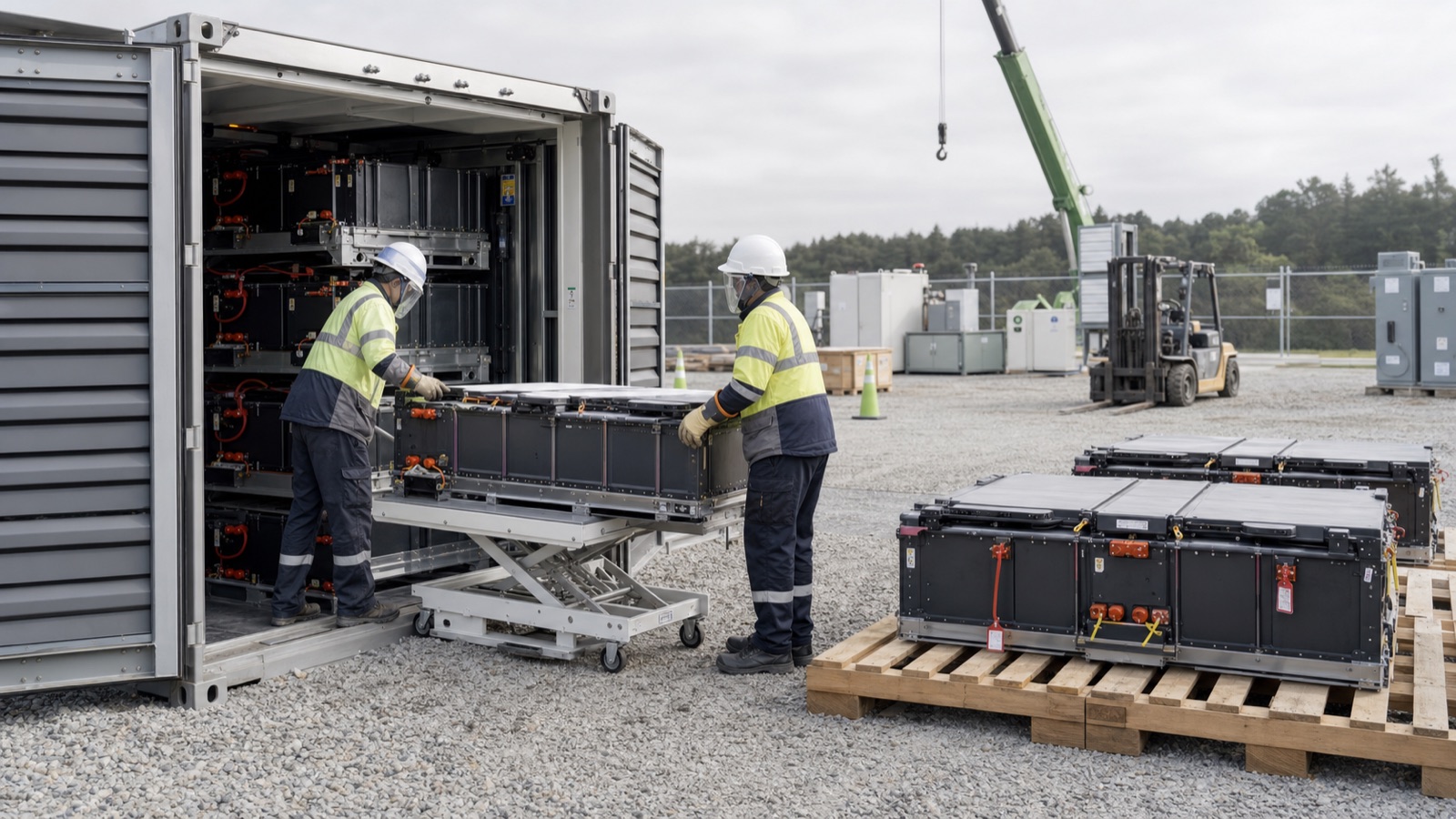
Define lifting points, module weights, rack stability, aisle clearances, temporary supports, rigging, weather limits, and emergency access. Remove battery modules with purpose-built handling equipment and protect terminals against short circuit. Maintain identification between each module and its condition record. Recover refrigerants and manage fire-suppression agents, coolants, oils, electronics, and other materials through appropriately qualified providers.
4. Package, stage, and transport by condition
Establish separate staging for normal, suspect, and damaged equipment. Protect batteries from physical damage, movement, short circuit, weather, and incompatible materials. The shipper and carrier must determine and meet applicable U.S. Department of Transportation hazardous-material requirements; use personnel qualified for the specific batteries, condition, packaging, mode, and route involved.
5. Choose reuse, repair, recycling, or disposal with evidence
Reuse decisions need a defined technical evaluation, ownership transfer, warranty position, and intended application. Batteries sent for recycling should go through a qualified downstream path appropriate to their chemistry and condition. Keep weights, counts, bills of lading or manifests as applicable, receiving records, certificates, exceptions, and a reconciliation against the original inventory. Local, state, and federal requirements can differ, so regulatory status must be confirmed for the actual project and jurisdictions.
6. Restore and close the site
Remove or retain foundations, conduit, roads, fencing, drainage, security, and utility equipment according to the approved end state. Address spills, staining, damaged surfaces, vegetation, grading, and permit conditions. Complete final photos, utility and owner acceptance, open-item closure, and a record package that ties every major asset and material stream to its disposition.
Owner deliverables that make the closeout auditable
- approved scope, work breakdown, schedule, responsibility matrix, and site logistics plan;
- job hazard analysis, emergency arrangements, isolation plan, and required permits;
- equipment and battery inventory with condition, weight, serial or batch information, and disposition route;
- lift plans, packaging and staging plan, qualified transport path, and downstream facility information;
- daily progress, photos, exceptions, damaged-equipment decisions, and change approvals;
- shipment and receiving evidence, recycling or disposition records, and inventory reconciliation; and
- restoration records, final site condition, owner acceptance, and retained-document index.
Questions to answer before awarding the work
- Who has final authority over shutdown, switching, isolation, and release for removal?
- How will battery condition be assessed and abnormal equipment segregated?
- Who is the shipper of record, and who verifies packaging and transportation compliance?
- Which downstream facilities will receive each material stream, and what evidence will they return?
- What refrigerants, fire agents, fluids, electronics, and non-battery materials require specialist handling?
- What changes if modules are damaged or the planned recycler rejects a load?
- What site-restoration and permit-closeout criteria define completion?
ETech decommissioning support
ETech scopes can include site assessment, shutdown planning support, electrical isolation and verification by qualified personnel, controlled equipment disassembly, battery and material inventory, field documentation, logistics coordination, recycler coordination, and site closeout. Final responsibilities depend on system condition, ownership, jurisdiction, permits, transport requirements, and the qualified specialty partners required for the project.